
Buying a home in the San Fernando Valley starts with understanding its neighborhoods, property types, and market conditions.
The San Fernando Valley covers roughly 260 square miles — more than half the land area of the entire City of Los Angeles. That scale is worth keeping in mind when you’re buying a home here.
Neighborhoods like Granada Hills, Porter Ranch, Northridge, North Hollywood, Sherman Oaks, and Woodland Hills are all part of the Valley, but they offer different housing, lot sizes, density, commute routes, and price points.
If you’re expecting a uniform real estate market, you won’t find it here. Instead, the Valley offers a wide mix of homes and distinct communities, many with identities that have been woven into LA for generations.
This guide will help find the right footing as you navigate San Fernando Valley real estate.
Table of Contents
- Know what part of the Valley you’re looking at
- Get a better sense of the types of homes for sale in San Fernando Valley
- Know how much you’ll typically pay for a home in the Valley
- Do your due diligence before you close
- FAQs about San Fernando Valley real estate
- Buy your dream home in San Fernando Valley with Gary Keshishyan
Know what part of the Valley you’re looking at
The San Fernando Valley is too large and varied to treat as one housing market. A home in Granada Hills can come with a very different set of tradeoffs from one in Porter Ranch, Northridge, North Hollywood, Sherman Oaks, or Woodland Hills.
Below is a quick overview of how those areas differ.
- Granada Hills – Established single-family neighborhoods dominate, with postwar ranch homes, Mid-Century Modern properties, larger lots, and hillside pockets. Balboa Highlands is especially notable for its collection of Joseph Eichler homes.
- Porter Ranch – Newer development is a bigger part of the landscape here, including master-planned communities, larger contemporary homes, and neighborhoods with excellent HOA amenities.
- Northridge – Housing runs from established single-family homes to condos and townhomes. California State University, Northridge is a major presence, and the neighborhood sits near several of the Valley’s main commercial corridors.
- North Hollywood – Expect greater density and more multifamily housing, along with condos, restaurants, entertainment, and Metro access around the NoHo Arts District.
- Sherman Oaks – The housing mix shifts from condos and apartments near Ventura Boulevard to single-family homes in quieter residential streets and hillside areas. Access to the 101 and 405 is also a major consideration for commuters.
- Woodland Hills – On the Valley’s western end, buyers will find everything from condos and tract homes to larger hillside properties, with Warner Center, the 101, and the Santa Monica Mountains all shaping the area.
Get a better sense of the types of homes for sale in San Fernando Valley
Single-family homes make up the largest share of the San Fernando Valley market. In June 2026, the Southland Regional Association of REALTORS® reported 1,904 active single-family home listings compared with 911 condominium listings — meaning roughly two-thirds of available homes and condos were single-family properties.
Across the Valley, you’ll find older single-family homes, newer planned developments, condos and townhomes, and larger hillside properties. Granada Hills alone includes postwar ranch homes, Mid-Century Modern properties, custom hillside residences, and select townhome communities.
Each comes with a different set of considerations:
- Established single-family homes – Often the best place to look for larger lots and more architectural variety. With older properties, pay closer attention to roofs, plumbing, electrical systems, HVAC, and previous renovations.
- Newer homes and planned communities – These tend to offer more contemporary layouts and newer systems, though HOA dues, community rules, and smaller or more standardized lots may be part of the tradeoff.
- Condos and townhomes – These can mean less exterior maintenance, but buyers also need to assess HOA fees, reserves, insurance, rules, and possible special assessments.
- Hillside and larger-lot properties – More land, privacy, or views can be a very appealing prospect, but drainage, retaining walls, access, and landscaping can add another layer of due diligence.
Know how much you’ll typically pay for a home in the Valley

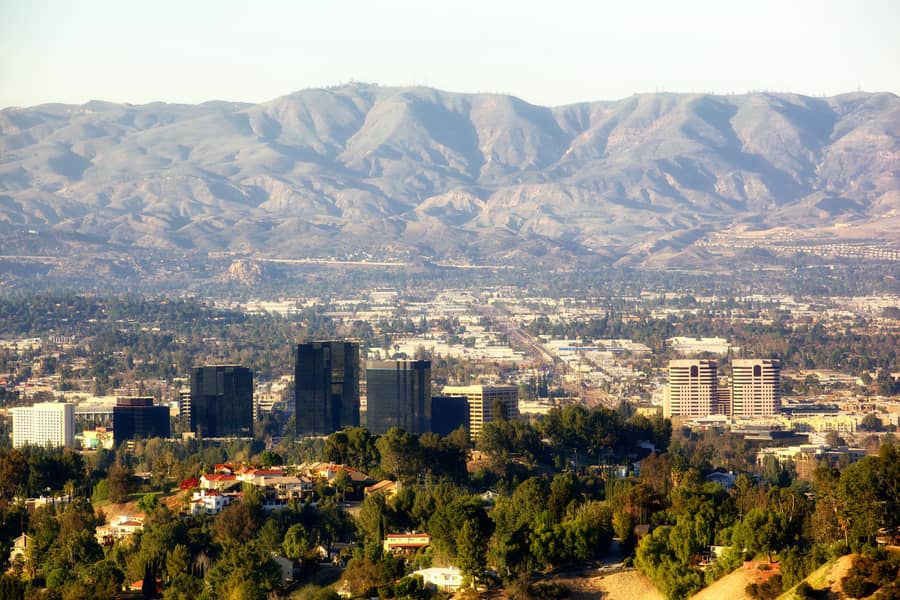
A wide view across Los Angeles underscores just how much ground buyers cover when comparing neighborhoods across the San Fernando Valley and the greater city.
Home prices across the San Fernando Valley vary sharply by neighborhood. As of writing, current median listing prices are about $1.05 million in Granada Hills, $1.2 million in Northridge, $1.48 million in Porter Ranch, $1.46 million in Woodland Hills, and $1.6 million in Sherman Oaks.
Just keep in mind that the asking price is just one aspect of the total cost of owning the home. Once you’ve narrowed down a few properties, run the numbers on the specific home you’re eyeing — taking into account these line items:
- Down payment and financing – Twenty percent is common, but it isn’t mandatory. On a $1.5 million home — a realistic price point in Porter Ranch, Woodland Hills, or Sherman Oaks — that would mean $300,000 down. Lower-down-payment options may be available depending on the buyer and loan program.
- Property taxes – California’s Proposition 13 sets the base property-tax levy at 1% of assessed value, before voter-approved debt and other assessments are added. On a newly purchased $1.5 million home, that 1% alone is $15,000 a year, or $1,250 a month.
- Homeowners insurance – Start shopping for coverage while you’re still doing your due diligence, especially for homes near the Valley’s foothills. Premiums and availability can vary substantially by address, so get a quote for the property you’re actually considering.
- HOA dues – These matter more in some parts of the Valley than others. Buyers looking at condos, townhomes, or planned communities — including many newer developments in Porter Ranch — should look beyond the monthly fee and review what it covers, the association’s reserves, and any pending assessments.
- Repairs and maintenance – Two homes with similar asking prices can become very different financial propositions once condition enters the picture. An older home may offer a larger lot or more architectural character, but issues with the roof, HVAC system, plumbing, electrical work, or drainage can introduce additional — often unexpected — costs.
Do your due diligence before you close
Once you’re under contract, you need to know exactly what you’re getting from the transaction. Look into the condition of the property, its records, and any obligations that will follow you after closing.
- Find out what’s original and what isn’t. This matters with the Valley’s older housing stock. Balboa Highlands in Granada Hills, for example, was built between 1962 and 1964. In a home of that age, don’t simply ask whether it has been “updated.” Find out when the roof, HVAC, electrical, plumbing, windows, and other major components were replaced, and have the relevant systems inspected. Los Angeles City Planning confirms that the neighborhood’s Eichler tract dates to the early 1960s.
- Take hillsides, drainage, and grading seriously. A view lot can introduce questions that a flat suburban lot doesn’t. Porter Ranch is a good example: its Specific Plan specifically addresses hillside grading, erosion control, and the effects of development on sloped terrain. If you’re considering a hillside property there, pay close attention to drainage, retaining walls, grading, slope conditions, and signs of soil movement — and bring in a specialist if the general inspection raises concerns.
- Verify additions and conversions. A converted garage, enclosed patio, or added bedroom can be useful space, but don’t assume the work was permitted because it looks professionally finished. If, say, a Granada Hills ranch has substantially more living space than neighboring homes of the same vintage, check the permit history and compare it with the disclosures.
- If there’s an HOA, investigate the association as carefully as the home. This is especially relevant when looking at condos, townhomes, or common-interest communities, including planned developments in areas such as Porter Ranch. Review the monthly assessments, budget, reserve study, insurance, recent meeting minutes, and any pending special assessments.
FAQs about San Fernando Valley real estate
How long does escrow take in California?
There isn’t one mandatory escrow period for every California home purchase. The closing date is negotiated in the purchase agreement, and the timeline can depend on financing, appraisal, inspections, disclosures, title work, and other conditions of the sale. Escrow remains open until the agreed conditions are satisfied and the transaction is ready to close.
Can I back out after my offer is accepted?
Potentially, but not simply because you changed your mind. Your ability to cancel depends on the terms of the purchase agreement and any contingencies that remain in effect. For example, financing, appraisal, or investigation contingencies may give a buyer cancellation rights under specified circumstances. Once contingencies are removed, the consequences of cancelling can be very different.
Is a home inspection required?
California strongly encourages buyers to investigate the property, but your inspections should be tailored to the home. A general inspection may lead to additional evaluations by a roofer, plumber, electrician, structural engineer, pest specialist, or another professional if something warrants a closer look. The California Department of Real Estate also advises buyers with questions about alterations or additions to review permits and other records with the city.
What is the final walkthrough actually for?
Think of it as a verification, not another full inspection. You’re checking that the property is still in the expected condition, that agreed repairs have been completed, and that nothing material has changed since your earlier visits. The commonly used California purchase agreement provides for a final verification shortly before close of escrow.
Buy your dream home in San Fernando Valley with Gary Keshishyan
Buying in the San Fernando Valley gets easier when you know what to look for — and what to question. From comparing neighborhoods and property types to reviewing disclosures, shaping an offer, and getting through escrow, I bring more than 25 years of local real estate experience to the table.
My job is to make your real estate transaction a breeze while protecting your interests.
If you’re considering a home in Granada Hills or elsewhere in the Valley, call 818.606.6069 or email me to get your free real estate consultation.